Overview
ESP-NOW Low-Power Wireless Communication Protocol
As IoT deployments continue to expand, low-power and fast-response wireless communication has become a core requirement for connected devices. Traditional protocols such as Bluetooth LE and Zigbee often face limitations including higher latency, additional gateway requirements, and complex networking. FANlun's ESP-NOW protocol is a highly efficient wireless communication solution designed specifically for IoT devices. It allows direct communication between devices without a router. Built on a data-link-layer architecture, it simplifies the conventional five-layer OSI stack, dramatically reducing latency and power consumption while maintaining coexistence with Wi-Fi and Bluetooth LE. ESP-NOW is supported across FANlun's Wi-Fi SoC portfolio and provides a stable, reliable communication foundation for smart appliances, remote control products, sensor networks, and many other applications.
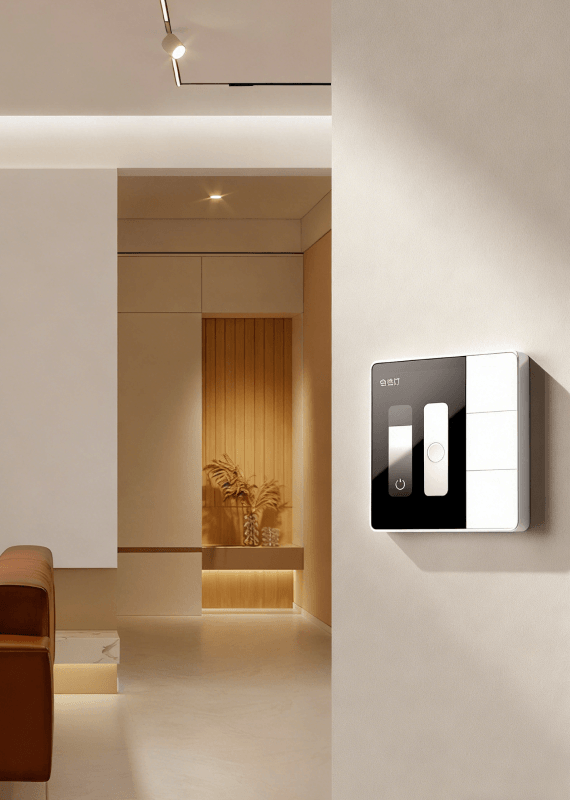
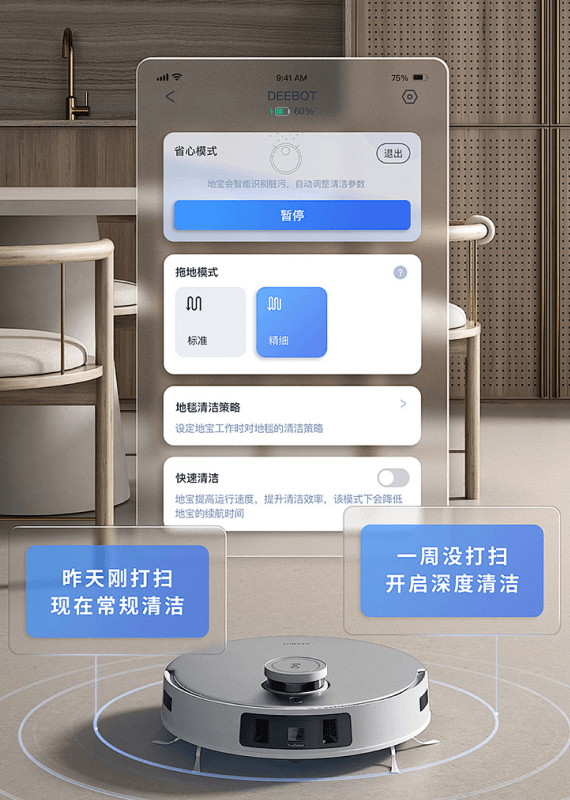
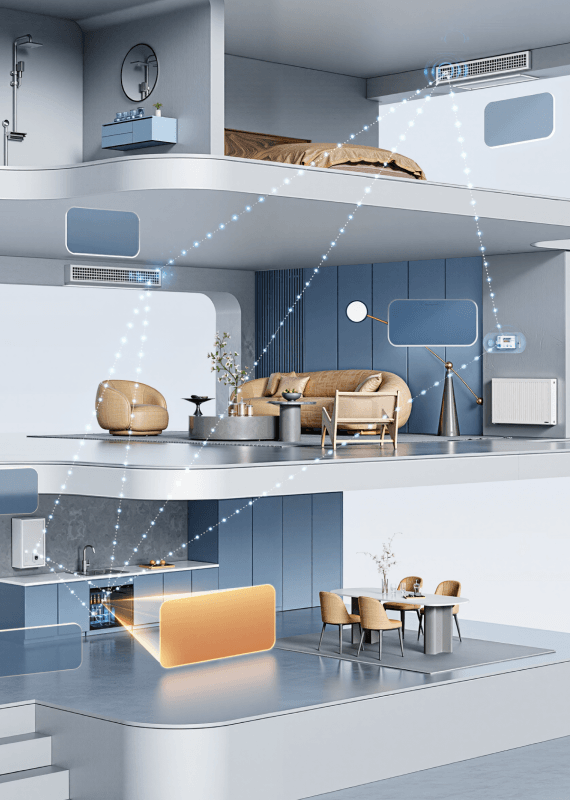
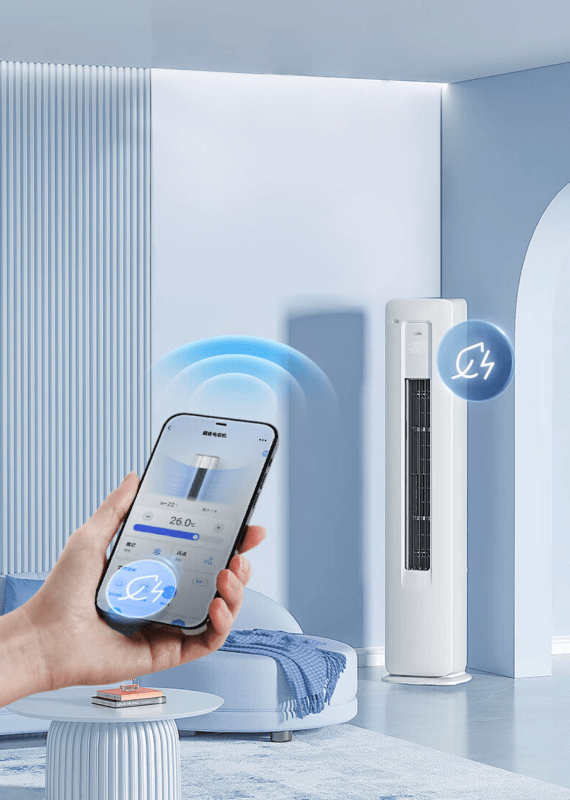
Applications
Industry Challenges
High Communication Latency
Traditional protocols can exceed 500 ms response time in congested networks, harming user experience.
Gateway Dependence
Protocols such as Zigbee and Bluetooth LE require extra gateways, increasing system complexity and cost.
Severe Power Consumption Challenges
Ordinary Wi-Fi devices have high standby power draw, leaving battery-powered products with only weeks of runtime.
Complex Network Architecture
Layered protocol stacks reduce transmission efficiency and increase packet loss.
Poor Compatibility
Devices from different brands often cannot interoperate, creating information silos.
Insufficient Security
Simple encryption mechanisms struggle against professional attacks and put sensitive data at risk.
Limited Coverage Range
Single-hop communication distance is short, requiring many relay nodes for large-area deployment.
Our Solution
ESP-NOW Low-Power Wireless Communication Protocol
ESP-NOW is FANlun's high-efficiency wireless communication protocol, developed to solve these industry challenges at the architectural level. It uses a flattened protocol design that simplifies the traditional five-layer OSI model into a lightweight single-layer transmission path, eliminating unnecessary packet encapsulation and parsing steps so data can move directly between devices. It supports one-to-many and many-to-many communication with up to 20 devices in a network. A unique window synchronization mechanism greatly reduces receiver-side power consumption while preserving millisecond-level response, lowering overall device power usage by about 80%. The protocol also integrates ECDH- and AES-based encryption to protect transmitted data. ESP-NOW coexists with Wi-Fi and Bluetooth LE on the same chip with no extra spectrum allocation required. Complete SDKs and API documentation are provided across FANlun's SoC family, including ESP8266, ESP32, ESP32-S, and ESP32-C series, enabling developers to build prototypes within about two weeks.
Core Capabilities
01Protocol Architecture Advantages
A streamlined protocol stack with flattened architecture that removes multi-layer overhead and improves transmission efficiency by 60%.
Intelligent power management through a window synchronization mechanism that lets receivers sleep most of the time and reduces power consumption by 80%.
Millisecond-level responsiveness with end-to-end latency below 50 ms, even in crowded network environments.
Secure communication based on ECDH and AES-128/256 encryption to resist common attack vectors.
High reliability through automatic retransmission mechanisms that keep packet loss below 0.1%.
02Hardware Platform Support
Full family compatibility across ESP8266, ESP32, ESP32-S, ESP32-C, and related SoC lines.
Wireless coexistence with Wi-Fi and Bluetooth LE on the same chip without extra hardware.
Ultra-low-power operation, including ESP32-C2 standby current around 1 ?A and more than two years of CR2032 battery life in reference switch designs.
Long-range transmission with 100 to 200 meters of line-of-sight reach and stronger wall penetration than Bluetooth LE.
03Development Support
Complete SDKs with API references, sample code, and debugging tools.
Multi-platform support for Arduino, ESP-IDF, MicroPython, and other development environments.
Detailed application guides that help developers finish prototypes within about two weeks.
Open-source ecosystem resources with a rich GitHub community and active developer support.
Professional services for customized development, test validation, and mass-production rollout.
Customer Value
Product Differentiation
Millisecond-level response and ultra-long standby time significantly strengthen product competitiveness.
Cost Optimization
No extra gateways or relay nodes are required, cutting BOM cost by 30% to 40%.
Higher Development Efficiency
A simplified architecture shortens development processes and reduces time to market by 50%.
Upgraded User Experience
Instant response and stable connectivity can improve user satisfaction by 45%.
Longer Battery Life
Low-power design enables coin-cell-powered devices to run for more than two years, lowering maintenance cost.
Improved Security
Advanced encryption mechanisms protect user data and reduce security risk.
Simplified Deployment
No complicated network configuration is required, and most users can finish pairing within five minutes.
Convenient Maintenance
OTA firmware updates help reduce after-sales maintenance cost.
Expanded Business Value
Reliable connectivity creates room for new value-added services and additional revenue.