Overview
End-to-End AIoT Face Detection Solution
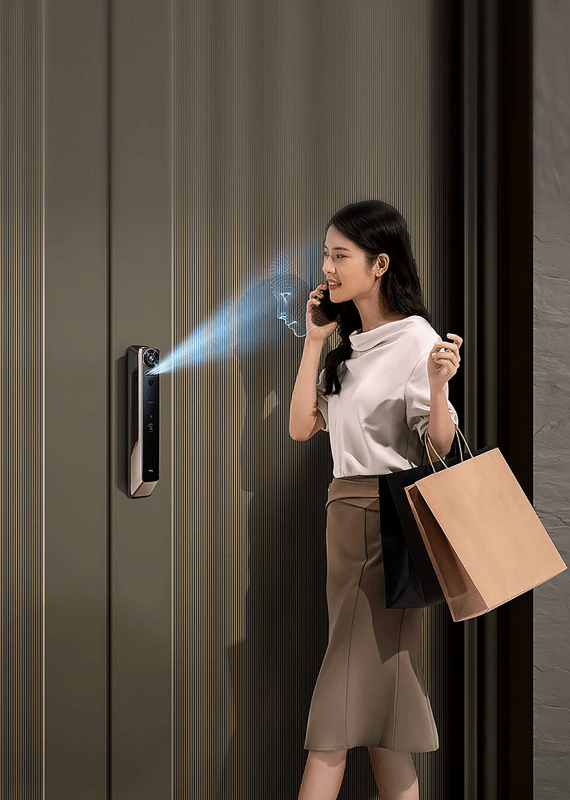
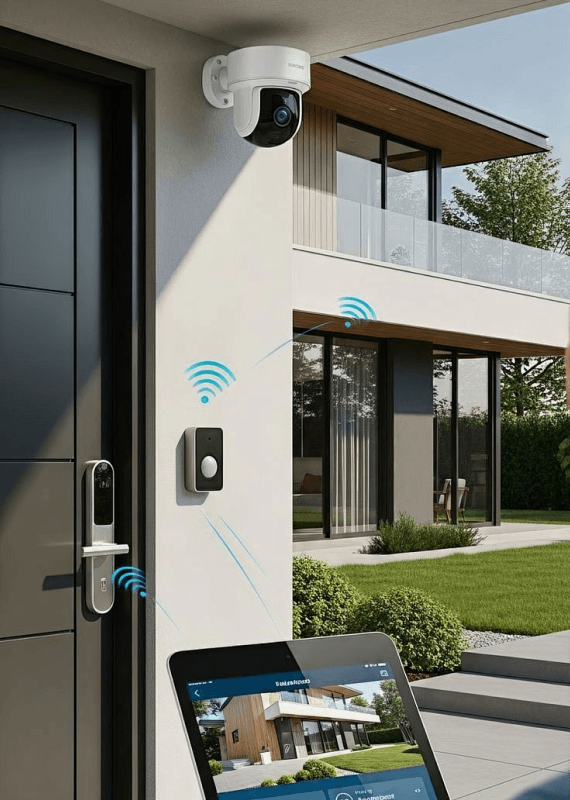
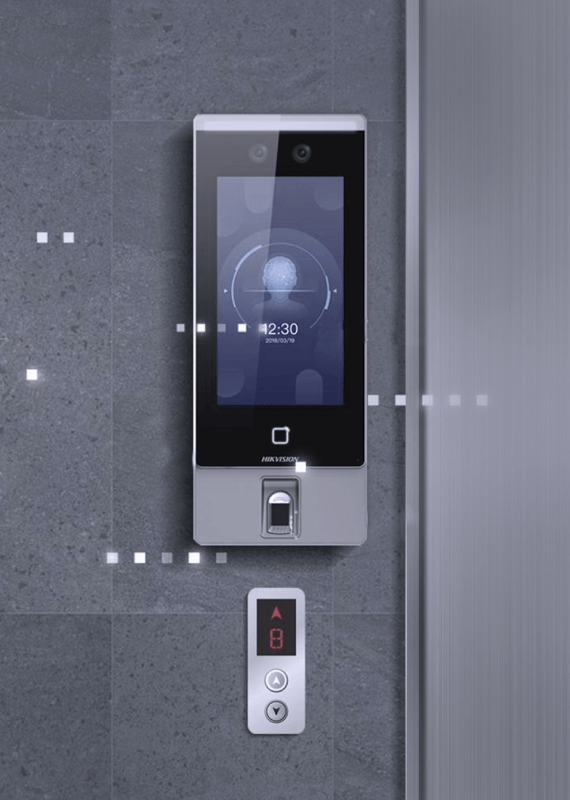
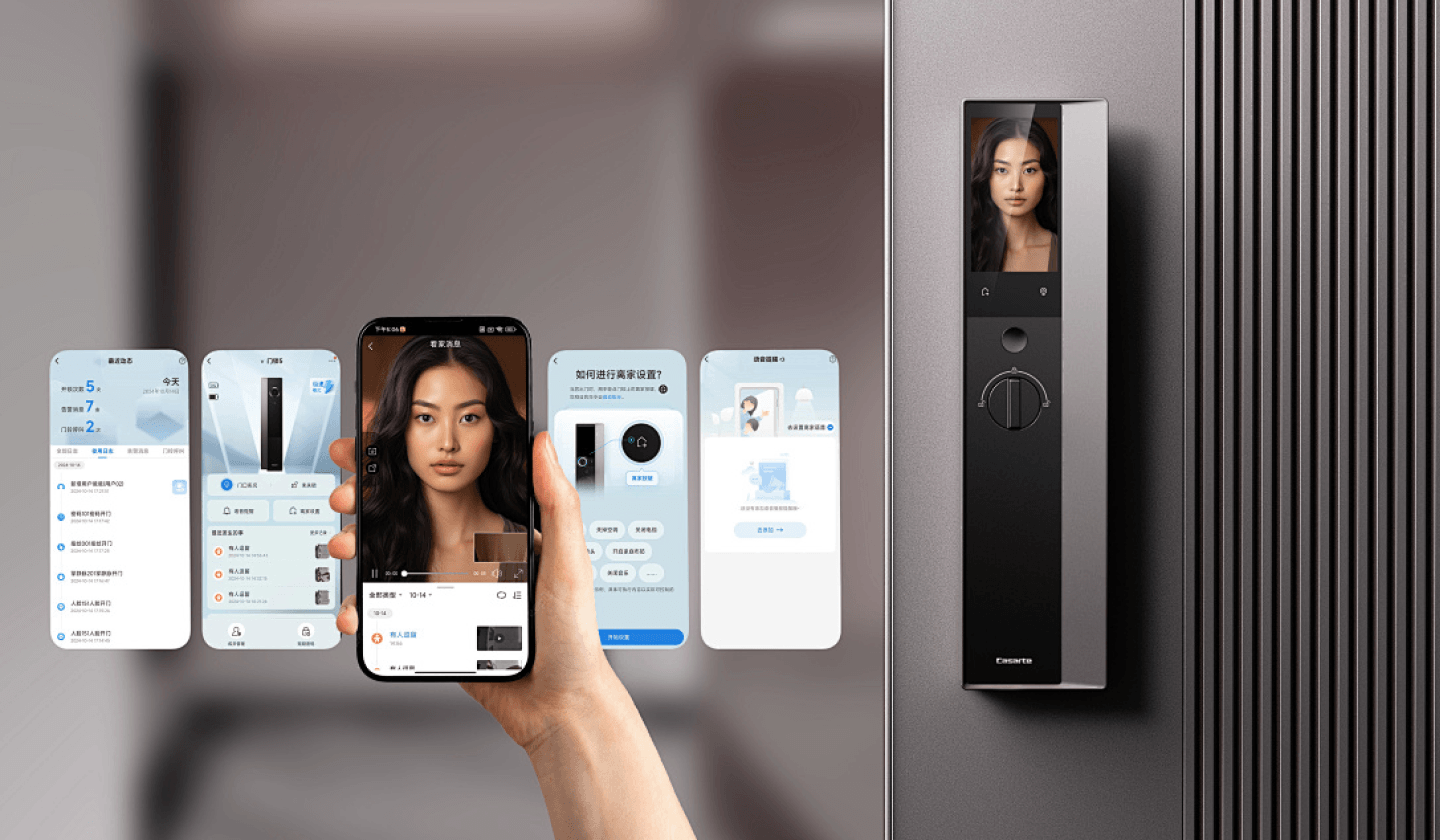
As smart IoT continues to develop rapidly, face detection and recognition have become core functions in smart access control, smart homes, enterprise security, and many related scenarios. Traditional solutions often depend on cloud processing, which introduces high latency, privacy risks, and complete service failure when offline. Based on the ESP32 family, FANlun has launched an end-to-end AIoT face detection solution that deeply integrates the ESP-WHO AI framework and the ESP-EYE development platform to deliver face detection, recognition, and voice interaction on a single chip. All AI computation is completed locally without additional co-processors, protecting user privacy while delivering millisecond-level response times and bringing a major upgrade to face recognition applications.
Applications
Industry Challenges
Privacy and Security Risks
Most face recognition solutions upload data to the cloud, creating significant privacy exposure.
Heavy Network Dependence
Recognition functions often fail completely when connectivity is lost, reducing reliability in critical scenarios.
Poor Latency Experience
Round-trip cloud processing delays are often above two seconds, leading to weak user experience.
High Cost Structure
High-performance face detection usually requires extra DSP or NPU chips, increasing BOM cost by more than 40%.
High Development Barrier
AI algorithm integration is complex, and many small and mid-sized vendors lack specialized AI teams.
Severe Power Challenges
Continuous face detection sharply raises power draw and can reduce battery life by 70% on battery-powered products.
Difficult Integration
When hardware, algorithms, and software come from different suppliers, debugging becomes difficult and product launch cycles lengthen.
Our Solution
End-to-End AIoT Face Detection Solution
FANlun's AIoT face detection solution is centered on ESP32-S3 and ESP32-P4 chips and deeply integrates the ESP-WHO framework to deliver single-chip local face detection and recognition. The architecture has three layers. The edge layer uses ESP-EYE family boards that integrate a 2 MP camera, digital microphone, 8 MB PSRAM, and 4 MB to 8 MB flash with built-in AI acceleration and 240 MHz to 400 MHz processing performance. The algorithm layer relies on ESP-WHO with optimized CNN models to achieve face detection accuracy above 95%, recognition speed below 500 ms, and local storage plus recognition for up to 10 face IDs. The interaction layer adds voice wake-up with ?Hi FANlun? and supports dual-mode voice plus face interaction, while automatic recovery under network interruption protects service continuity. The entire solution works without extra co-processors, reduces BOM cost by roughly 35%, and keeps standby current at only 10 ?A, giving developers a true end-to-end platform from hardware through software while greatly simplifying the development process.
Core Capabilities
01Professional Hardware Platform
Multiple development boards supported, including ESP-EYE for baseline face detection with a 2 MP camera, 8 MB PSRAM, and 4 MB flash.
ESP32-S3-EYE enhanced face-detection platform with integrated LCD, 8 MB PSRAM, and 8 MB flash for real-time image display.
ESP32-P4-EYE high-performance vision board with MIPI-CSI support and USB 2.0 high-speed transfer for more complex visual applications.
Dedicated AI acceleration with built-in NPU resources delivering 256 GOPS for face detection and support for mixed INT8 and FP16 precision.
Rich peripheral connectivity for RGB LCDs, cameras, microphone arrays, touch sensors, and a complete range of IoT peripherals.
Ultra-low-power design with a low-power coprocessor, only 10 ?A standby current, and roughly 70% lower face-detection power consumption.
Reliable wireless performance with Wi-Fi 6-level connectivity and automatic network recovery to preserve service continuity.
02Software and Development Support
ESP-WHO framework with pre-integrated modules for face detection, face alignment, feature extraction, and face recognition, allowing integration in as little as five lines of code.
ESP-IDF SDK with a complete development environment and toolchain for Windows, Linux, and macOS.
Rich example projects covering more than 10 face-related scenarios including basic detection, multi-angle recognition, and liveness detection.
Fast onboarding documentation that enables prototype development in about two weeks.
Voice and vision fusion through seamless integration with the ESP-SR speech-recognition SDK for wake-up plus face dual-mode interaction.
Mass-production support covering design validation, production testing, and compliance certification to speed up market launch.
Customer Value
Privacy Protection
All face data is processed locally rather than uploaded to the cloud, helping products comply with privacy requirements such as GDPR.
Product Differentiation
Advanced integrated AI functionality significantly raises technical value and market competitiveness.
Shorter Development Cycles
The end-to-end solution cuts development time by about 70% and speeds up time to market.
Better User Experience
Millisecond-level response and offline availability can improve user satisfaction by 40%.
Optimized Cost Structure
A single-chip architecture replaces multi-chip designs and reduces BOM cost by more than 35%.
Balanced Power Efficiency
Intelligent power management can extend the battery life of portable devices by roughly three times.
Lower Technical Barrier
No dedicated AI team is required, and standard embedded engineers can integrate AI features directly.
Expanded Business Value
Identity-based value-added services open up new revenue opportunities and increase customer lifetime value.
Strong Ecosystem Compatibility
Certified for Amazon AWS ecosystems and able to connect smoothly with FreeRTOS and AWS IoT services.